Years of symptoms but no explanation, this is the common thing we get to hear constantly.
A woman comes in exhausted for three years. Exhausted with irregular periods, weight stubborn around the middle, skin breaking out in her thirties. She had blood tests. Everything came back “normal.”
Normal for what? A standard blood panel doesn’t always include the hormones that would explain what’s happening.
This is the gap we address at Dr. Samita Pan’s clinic.
The Part Nobody Joins Up
Hormones don’t work in separate boxes. Insulin resistance raises androgen levels. Elevated androgens disrupt ovulation. A thyroid that’s underperforming changes how oestrogen is metabolised. Chronic stress keeps cortisol high, which pushes progesterone down, which disrupts sleep, which raises cortisol higher.
These are not separate problems. They’re the same problem moving through a connected system.
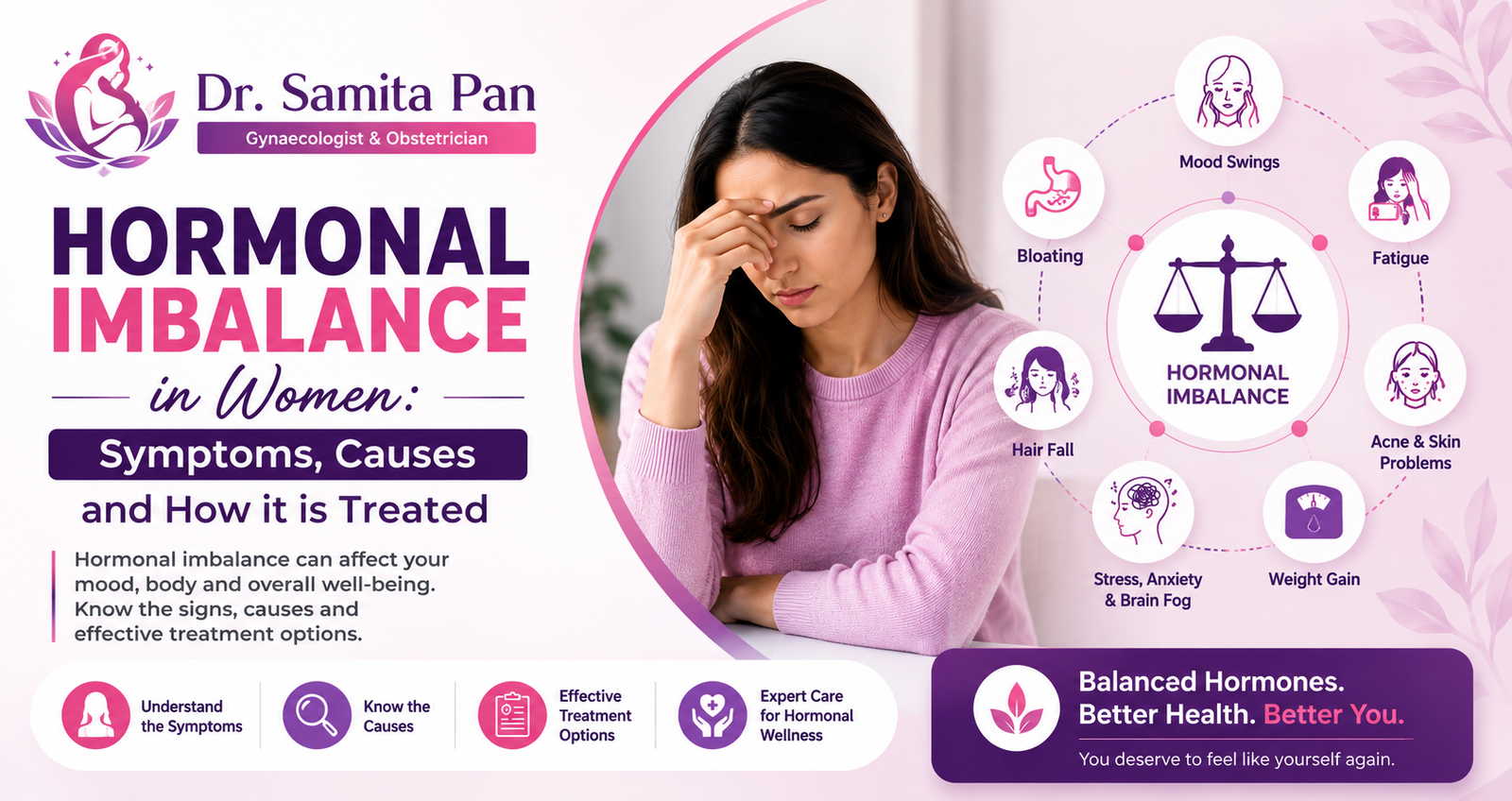
When a patient arrives with fatigue, skin changes, irregular periods, and weight gain that won’t shift, these symptoms look unrelated if you look at each one in isolation. They don’t look unrelated once you see the hormonal picture underneath them.
What We Find When We Look Properly
Thyroid problems come up more than patients expect which is called Hypothyroidism. The symptoms overlap with almost everything else: fatigue, weight changes, low mood, hair thinning, irregular cycles. We check thyroid routinely because we keep finding it.
PCOS affects one in five women and still gets missed constantly. The presentation varies so much between patients that the diagnosis requires the full clinical picture, not just an ultrasound.
Perimenopause arriving in the late thirties surprises most patients. We mention it and get a confused look. But oestrogen fluctuations begin years before the last period. If a woman is 37 and noticing mood changes, sleep disruption, and cycle shifts, it’s worth considering.
And cortisol. Running high long enough that the body has forgotten what normal feels like. Progesterone drops, insulin resistance develops, sleep deteriorates. The symptoms look like burnout because in many ways they are.
How to Cure Hormonal Imbalance in Females
A full panel: thyroid function including TSH, T3, T4, antibodies. Fasting insulin and glucose. FSH, LH, AMH. Oestrogen and progesterone at the right point in the cycle. Prolactin. Androgens. This takes one blood draw. It produces a picture that tells us which hormone is off, by how much, and what’s likely driving it.
Treatment follows from there. Not from the symptom list. From the numbers.
Hypothyroidism: thyroid hormone replacement, dose adjusted over time until the patient feels the difference. Not until the TSH is in range. Until the patient feels well.
PCOS with insulin resistance: cutting refined carbohydrates isn’t a weight loss plan here. It’s an insulin intervention. Insulin drops, androgen levels follow, ovulation often restores. Metformin where the dietary change isn’t shifting the markers fast enough.
Oestrogen and progesterone imbalance: hormonal therapy calibrated to that specific patient’s levels and life stage. Not a standard protocol. An individual plan.
- How to Treat Hormonal Imbalance Naturally
Some changes move the numbers genuinely. We recommend them because they work, not as alternatives to investigation.
Proper Sleep: It regulates cortisol, insulin, and reproductive hormones simultaneously. Patients who sort sleep before adding anything else often see improvement before any medication starts.
Reduced refined carbohydrates: This can directly lower insulin and androgen levels. Not calories. Not fat. This is part of treatment.
Magnesium, Inositol for PCOS, and Vitamin D: Evidence supports the use of each of these in the right circumstances.
Natural approaches have real limits though. Thyroid conditions and significant oestrogen deficiency usually need medication. Testing tells us which situation we’re dealing with. Self-treating without testing sometimes helps and sometimes delays finding out what’s wrong.
Before Coming In
Track symptoms across two cycles. Not a formal chart. Notes on a phone. When things are worse, what changes them, how they track with the cycle. This information is far more useful at a consultation than a verbal summary.
If supplements or natural remedies have already been tried, bring a list. What was taken, for how long, what if anything changed.
What Patients Want to Know
How to cure hormonal imbalance in females?
Depends entirely on the cause. Thyroid replacement for hypothyroidism. Insulin management for PCOS. Hormonal therapy for oestrogen and progesterone imbalance. The treatment that works is the one matched to the actual cause.
How to treat hormonal imbalance naturally?
Sleep reduced refined carbohydrates, specific supplementation, and stress management all produce measurable effects. They work best when the diagnosis is clear. Testing before treating naturally gives natural approaches the best chance of working.
How to treat hormonal imbalance without medication?
Possible for cortisol-driven and early insulin-related imbalance where lifestyle changes move the markers. For thyroid conditions and oestrogen deficiency, medication is usually needed. The answer depends on what the panel shows.
The Most Common Thing We Hear at Follow-Up
“Why did nobody check this earlier.”
Not as a complaint. As genuine bewilderment. Women who’ve been living with explainable, treatable symptoms for years, managing each one separately, who finally have a full picture and a plan and can see the path forward.
Dr. Samita Pan provides full hormonal assessment for women, treatment matched to individual results, and follow-up that tracks whether things are actually improving. If symptoms have been sitting without a proper explanation, that assessment is where the answers are.
Read More: