
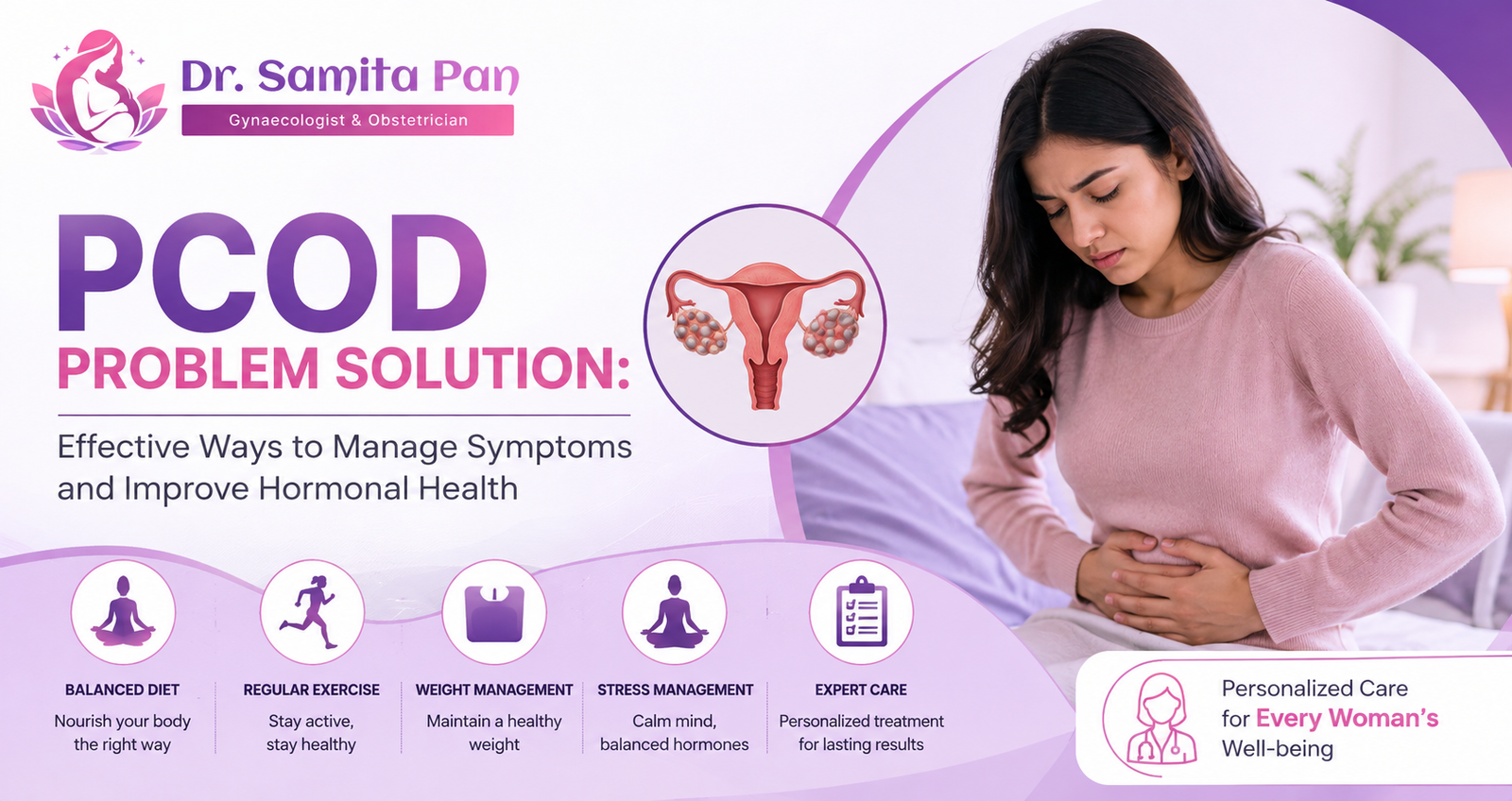
PCOD is a common hormonal condition that can affect menstrual cycles, ovulation, weight, skin, hair growth and fertility. If you are searching for a PCOD problem solution, the first thing to understand is that there is no single treatment that works for every woman. The right approach depends on your symptoms, hormonal health, lifestyle, age and whether you are planning a pregnancy.
The good news is that PCOD symptoms can often be managed effectively with appropriate lifestyle changes, medical treatment and regular monitoring.
What Is PCOD?
PCOD, commonly used to describe polycystic ovary syndrome (PCOS), is associated with hormonal imbalance and irregular ovulation. It may cause irregular or missed periods, acne, unwanted facial or body hair, difficulty managing weight and problems with conception.
Not every woman experiences the same combination of symptoms. Some women may have PCOS without being overweight, while others may mainly notice irregular periods or fertility difficulties.
PCOD Problem Solution: What Actually Helps?
Managing PCOD is usually a long-term process rather than a quick fix. A personalized plan may include the following.
Follow a Balanced, Sustainable Diet
A healthy eating pattern can support metabolic and hormonal health. Focus on balanced meals containing vegetables, fruits, whole grains, protein sources, healthy fats and appropriate portions.
Instead of relying on extreme diets or completely eliminating specific food groups, aim for eating habits that you can maintain consistently. Your gynecologist or a qualified dietitian can help create a plan according to your individual needs.
Make Regular Physical Activity a Habit
Exercise can be an important part of PCOD management. Regular physical activity may support healthy weight management, insulin sensitivity, cardiovascular health and overall well-being.
Walking, strength training, cycling, swimming, yoga or other enjoyable activities can be incorporated into your routine. Consistency is more important than following an extreme workout plan.
Work Towards a Healthy Weight If Needed
For women who are overweight, even modest weight loss may improve menstrual regularity, ovulation and some PCOD-related symptoms. It may also improve insulin and cholesterol levels.
However, PCOD is not only a condition affecting women who are overweight. Weight should therefore be assessed individually rather than assuming that weight loss is the solution for everyone.
Medical Treatment May Be Needed
Depending on your symptoms and goals, a gynecologist may recommend medication.
For women who are not trying to conceive, hormonal contraception may help regulate periods and reduce symptoms such as acne and excess hair growth. Certain medicines may also be considered when insulin resistance or metabolic concerns are present.
If pregnancy is the goal, treatment focuses on improving ovulation and addressing fertility needs. Medicines that stimulate ovulation may be recommended when appropriate.
Do not start hormonal medicines, metformin or fertility medicines without medical advice. The appropriate treatment depends on your health and reproductive goals.
Is PCOD Curable or Not?
One of the most common questions is: “Is PCOD curable or not?”
Currently, there is no permanent cure for PCOS. However, this does not mean that you cannot live a healthy life or control the condition. Treatment can reduce symptoms, improve menstrual regularity, support ovulation and lower some associated health risks.
Symptoms may also change over time. The goal is therefore not simply to find a “one-time PCOD cure,” but to develop a sustainable plan that keeps your symptoms and overall health under control.
Can PCOD Affect Fertility?
Yes, PCOD can affect fertility because irregular ovulation may make it harder to predict when an egg is released. However, having PCOD does not mean you cannot become pregnant.
Many women with PCOS conceive naturally, while others may benefit from lifestyle changes, medication or fertility treatment. If you are trying to conceive and have irregular periods, consulting a gynecologist can help identify whether irregular ovulation is affecting your chances of pregnancy.
What Tests May Be Recommended for PCOD?
There is no single test that confirms every case of PCOD. Depending on your symptoms, your doctor may evaluate:
- Menstrual and reproductive history
- Hormonal levels
- Blood glucose and metabolic health
- Physical symptoms such as acne or excess hair growth
- Weight and blood pressure
- Other possible causes of irregular periods
- Ultrasound findings when clinically appropriate
This evaluation is important because irregular periods can have several causes, including thyroid disorders, pregnancy, stress and significant changes in weight.
When Should You See a Gynecologist?
Consider speaking with a gynecologist if you have:
- Frequently irregular or missed periods
- Long gaps between periods
- Sudden or excessive facial hair growth
- Persistent acne
- Unexplained weight changes
- Difficulty becoming pregnant
- Symptoms that are affecting your daily life
Long gaps without periods should not simply be ignored. A doctor can determine the underlying cause and recommend appropriate treatment.
PCOD Problem Solution: The Bottom Line
The most effective PCOD problem solution is usually a personalized combination of healthy lifestyle habits, symptom management, medical treatment when necessary and regular follow-up. There is no instant PCOD cure, but symptoms can often be controlled successfully.
If you are experiencing irregular periods, hormonal symptoms or fertility concerns, consult a qualified gynecologist rather than depending on online remedies or self-medication. Early evaluation can help you understand your condition and choose a treatment plan suited to your individual needs.
FAQs:
Is PCOD completely curable?
PCOD/PCOS currently has no permanent cure, but its symptoms and associated health risks can often be effectively managed.
Can PCOD go away naturally?
Symptoms can improve with lifestyle changes and appropriate treatment, but improvement does not necessarily mean the underlying condition has permanently disappeared.
Can I get pregnant if I have PCOD?
Yes. PCOD can affect ovulation, but many women with PCOD become pregnant naturally or with appropriate fertility support.
What is the best PCOD problem solution?
There is no universal solution. Treatment should be based on your symptoms, metabolic health and whether you are planning pregnancy.
Should irregular periods due to PCOD be ignored?
No. Persistent irregular or absent periods should be discussed with a gynaecologist because prolonged menstrual irregularity may require treatment and evaluation.
Consult Dr. Samita Pan
If you are experiencing irregular periods, PCOD symptoms, hormonal changes, weight-related concerns, or difficulty conceiving, consult Dr. Samita Pan, Gynecologist near Phoolbagan, Kolkata for personalized evaluation and treatment guidance.
Don’t rely on self-medication or quick-fix PCOD remedies. A proper consultation can help identify your symptoms, understand the underlying hormonal concerns, and create a treatment plan suited to your individual needs.
Book a consultation with Dr. Samita Pan, Gynecologist near Phoolbagan, Kolkata, and take the right step toward better hormonal and reproductive health.
Read More: