
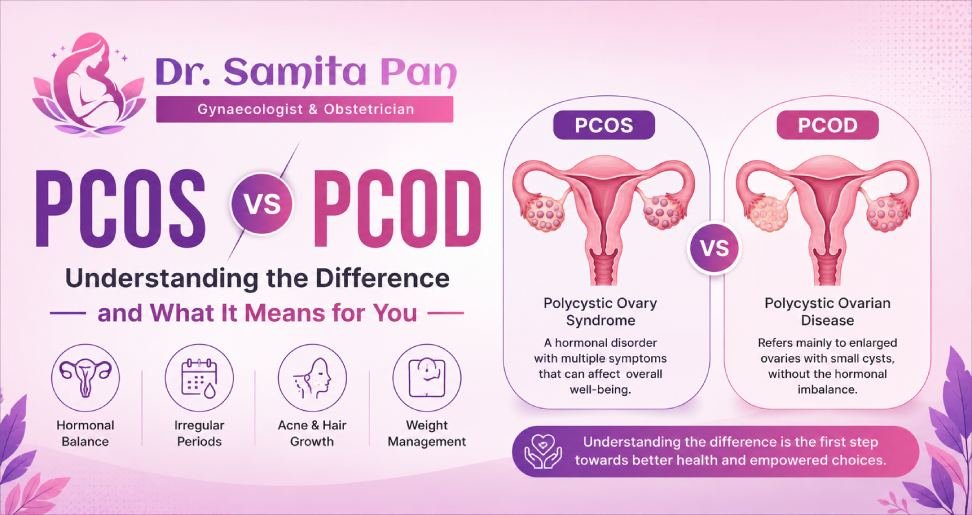
What we see in our clinic every week, women come to us having been told they have “PCOS or PCOD, one of those.”
They’ve been managing it for months, sometimes years. Eating better. Exercising. Cutting sugar and refined carbs. And things are a little better maybe, but not where they should be. They can’t figure out why nothing is fully resolving.
We are there to help, usually the answer is that the two conditions were never properly separated, and the management plan was built on a vague diagnosis instead of a specific one.
PCOS and PCOD are not the same condition. We need to be clear about that because the confusion is widespread and it has real consequences for the women we treat.
What We Tell Patients About PCOD
PCOD is Polycystic Ovarian Disease.
What we see in PCOD is the ovaries releasing immature eggs instead of mature ones. Those eggs build up, form cysts, and the ovaries enlarge. They start making more male hormones than normal. Periods go irregular. Acne, weight changes, excess hair, mood shifts. The picture is familiar.
But here’s what we always tell our PCOD patients. The ovaries are still functioning. Not well, but functioning. And when we get the management right, most women with PCOD see their cycles improve, their symptoms reduce, and their fertility stays intact. It responds to treatment. That’s the important part.
What We Tell Patients About PCOS
PCOS is Polycystic Ovary Syndrome. We explain early that this is a different category of problem.
In PCOS, we’re not just looking at the ovaries. The whole hormonal and metabolic system are involved. Insulin resistance is part of the picture for most of our PCOS patients. The body makes insulin but can’t use it properly. Weight builds up around the belly, and it doesn’t shift the way normal weight does. Periods don’t just become irregular; they sometimes stop entirely for months.
The hormone imbalance we see in PCOS is deeper than PCOD. Androgen levels are higher. Acne is more severe. Hair loss on the scalp, excess hair on the body. Fatigue that doesn’t lift. And over time, if we don’t manage it properly, the risks grow. Higher chance of type 2 diabetes, heart-related problems, and difficulty conceiving without support.
When PCOS patients tell us they’ve only been advised to change their diet, we know straight away that the treatment hasn’t been matched to the condition.
Why We See So Much Confusion
Because the two conditions share the same symptom list.
Irregular periods, cysts on ultrasound, higher androgen levels, acne and excess hair. A patient with PCOD and a patient with PCOS can sit in front of us with identical symptoms on paper.
This is why an ultrasound alone doesn’t give us the answer. It shows cysts are present. That’s one piece of information. The piece that separates PCOD from PCOS comes from blood tests. Hormone levels, insulin, FSH, LH, AMH, fasting glucose, thyroid. We look at the full picture together. That’s how we tell them apart.
Without blood tests, we’re guessing. And guessing leads to the wrong treatment.
How We Approach Treatment Differently
For PCOD, we start with lifestyle changing such as
- Cutting refined carbohydrates works.
- Regular movement works.
- Managing sleep and stress works.
These aren’t just suggestions we give patients to seem helpful. They genuinely shift the markers in PCOD. We add targeted medication where the lifestyle piece isn’t enough on its own.
For PCOS, we go further.
- Metformin or similar medication to address the insulin resistance.
- Hormonal treatment to bring the cycle back.
- If pregnancy is the goal, we look at ovulation support.
- We build the treatment plan around the metabolic picture, not just the ovarian one.
Lifestyle alone is not enough for PCOS and we’re direct about that with our patients.
The most common thing we see in PCOS cases is women who’ve been doing everything right with lifestyle and wondering why it’s not working. It’s not working because the insulin resistance is still driving the condition underneath.
What We Ask Patients to Do
Track the cycle every month. Length, regularity, how heavy, what symptoms come with it. We find this pattern across several months far more useful than a single appointment snapshot.
Don’t stop at an ultrasound result. Come back for the blood tests. That’s where the real answer is.
And if things haven’t shifted after months of management, come back to us. The diagnosis may need to be revisited.
Questions We Hear Often :-
Ans :- Both cause irregular periods, raised androgens, acne, and excess hair. PCOS adds insulin resistance, stubborn weight gain around the belly, more severe hormone imbalance, and longer-term health risk.
Ans :- Blood tests tell us. Symptoms alone look the same in both conditions. The hormone and metabolic panel together is what separates them.
Ans :- Yes. PCOD responds well to lifestyle and targeted medication. PCOS needs insulin management and hormonal treatment alongside lifestyle work. The plans are genuinely different.
Ans :- Years of managing the wrong condition with the wrong approach is years of symptoms that didn’t have to continue.
Dr. Samita Pan provides full assessment for PCOS and PCOD including blood tests, hormone panels, and treatment plans built around what each patient’s results show. If things haven’t been improving the way they should, that assessment is the right starting point.