
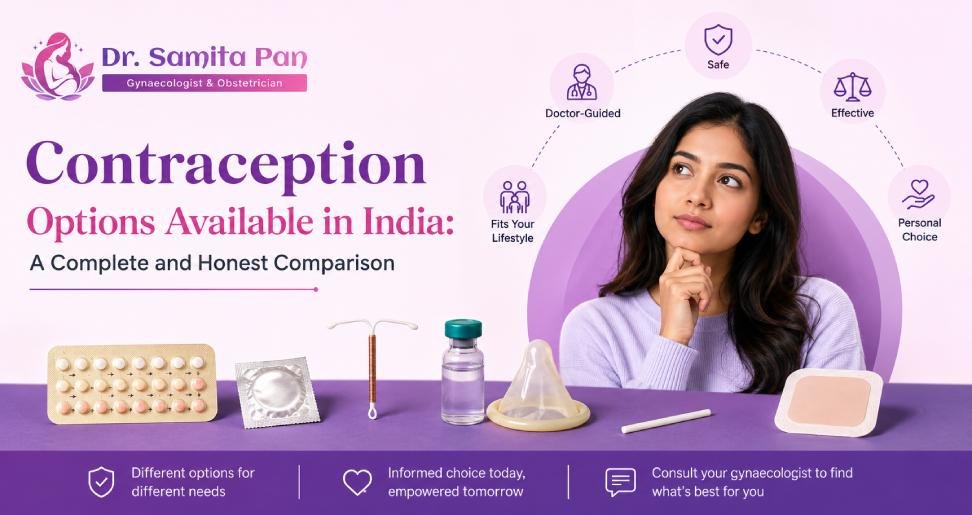
Choosing the right contraception method is an important decision for individuals and couples who want to plan their families, avoid unintended pregnancies, and maintain reproductive health. With numerous contraception options available in India, selecting the most suitable one can often feel confusing. Each method has its own advantages, limitations, effectiveness rates, and suitability depending on age, health condition, lifestyle, and future pregnancy plans.
This comprehensive guide provides an honest comparison of the most commonly used contraception methods in India, helping you make an informed decision with the guidance of a qualified gynecologist such as Dr. Samita Pan.
What Is Contraception?
Contraception refers to methods or devices used to prevent pregnancy. Some contraceptive methods also help protect against sexually transmitted infections (STIs), while others focus solely on preventing conception.
The ideal contraceptive method should be:
- Safe and effective
- Easy to use
- Suitable for your health condition
- Affordable
- Reversible if future pregnancy is desired
There is no single “best” method for everyone. The right choice depends on individual needs and medical history.
1. Male Condoms
Male condoms are among the most widely available and commonly used contraceptive methods in India.
How They Work
A condom acts as a barrier, preventing sperm from entering the female reproductive tract during intercourse.
Advantages
- Easily available without prescription
- Affordable
- Protects against STIs and HIV
- No hormonal side effects
- Suitable for occasional use
Limitations
- Must be used correctly every time
- Can tear or slip if not used properly
- Slight reduction in sensation for some users
Effectiveness
With perfect use, condoms are highly effective. However, incorrect usage can reduce their effectiveness.
Best For
Couples looking for a temporary, non-hormonal contraceptive method and STI protection.
2. Female Condoms
Female condoms are less commonly used but are available in India.
Advantages
- Controlled by the woman
- Provides STI protection
- Hormone-free
Limitations
- Less easily available
- Requires practice for correct insertion
- Can be more expensive than male condoms
Best For
Women seeking a barrier method they can control independently.
3. Oral Contraceptive Pills
Birth control pills are one of the most effective reversible contraception methods available.
How They Work
The pills contain hormones that prevent ovulation and make it difficult for sperm to reach the egg.
Advantages
- Highly effective when taken correctly
- Can regulate menstrual cycles
- May reduce menstrual pain
- Helps manage certain hormonal conditions
Limitations
- Requires daily intake
- Missing pills can reduce effectiveness
- Not suitable for some women with specific medical conditions
Best For
Women seeking a reliable, reversible, and long-term contraceptive solution.
Consulting an experienced gynecologist like Dr. Samita Pan can help determine whether hormonal pills are appropriate for your health profile.
4. Emergency Contraceptive Pills
Emergency contraception is designed for use after unprotected intercourse or contraceptive failure.
Advantages
- Can reduce the risk of unintended pregnancy
- Easily available at pharmacies
Limitations
- Not intended for regular contraception
- Less effective than routine contraceptive methods
- May cause temporary menstrual changes
Best For
Emergency situations such as condom breakage or missed contraceptive pills.
5. Intrauterine Devices (IUDs)
IUDs are small devices inserted into the uterus by a healthcare professional.
Types Available in India
- Copper IUD
- Hormonal IUD
Advantages
- Long-term protection
- Highly effective
- Reversible
- Minimal daily maintenance
Limitations
- Requires insertion by a doctor
- Some women may experience temporary discomfort
- Follow-up visits may be necessary
Best For
Women looking for long-term contraception without the need for daily attention.
6. Contraceptive Injections
Injectable contraceptives provide pregnancy protection for several weeks or months depending on the formulation.
Advantages
- Long-lasting
- Convenient
- Highly effective
Limitations
- Requires regular appointments
- Menstrual irregularities may occur
- Fertility may take some time to return after stopping
Best For
Women who prefer not to take daily pills.
7. Contraceptive Implants
Contraceptive implants are small rods inserted under the skin that release hormones over an extended period.
Advantages
- Long-term protection
- Highly effective
- Convenient
Limitations
- Requires insertion and removal by trained professionals
- Availability may be limited in some regions
Best For
Women seeking highly effective, long-duration contraception.
8. Natural Family Planning Methods
Natural methods involve tracking fertility signs and avoiding intercourse during fertile periods.
Common Methods
- Calendar method
- Basal body temperature monitoring
- Cervical mucus tracking
Advantages
- No hormones
- No medical procedures
- No cost involved
Limitations
- Requires discipline and accurate tracking
- Lower effectiveness compared to modern methods
Best For
Couples committed to careful fertility monitoring.
9. Permanent Contraception for Women (Tubectomy)
Tubectomy is a surgical procedure that permanently prevents pregnancy.
Advantages
- Permanent solution
- Highly effective
- No ongoing maintenance
Limitations
- Difficult to reverse
- Requires surgery
- Not suitable for women who may want future pregnancies
Best For
Women who have completed their families.
10. Permanent Contraception for Men (Vasectomy)
Vasectomy is a minor surgical procedure that prevents sperm from entering semen.
Advantages
- Safe and effective
- Permanent contraception
- Simpler procedure than female sterilization
Limitations
- Intended to be permanent
- Does not provide immediate contraception after the procedure
Best For
Men who are certain they do not want future biological children.
Honest Comparison of Contraceptive Methods
| Method | Pregnancy Prevention | STI Protection | Duration |
|---|---|---|---|
| Male Condom | Good | Yes | Single Use |
| Female Condom | Good | Yes | Single Use |
| Oral Pills | Very Good | No | Daily |
| Emergency Pill | Moderate | No | One-Time Use |
| Copper IUD | Excellent | No | Several Years |
| Hormonal IUD | Excellent | No | Several Years |
| Injection | Excellent | No | Months |
| Implant | Excellent | No | Years |
| Natural Methods | Variable | No | Ongoing |
| Tubectomy | Permanent | No | Lifetime |
| Vasectomy | Permanent | No | Lifetime |
How to Choose the Right Contraception Method
The best contraceptive option depends on several factors:
- Age
- Marital status
- Medical history
- Future pregnancy plans
- Lifestyle preferences
- Frequency of sexual activity
- Need for STI protection
A personalized consultation with a qualified gynecologist can help identify the safest and most effective choice.
Why Professional Guidance Matters
Many individuals choose contraception based on advice from friends, family members, or online information. However, every person’s reproductive health needs are unique. Certain contraceptive methods may not be suitable for women with specific medical conditions, hormonal concerns, or future fertility goals.
This is why expert counseling from experienced women’s healthcare professionals such as Dr. Samita Pan is essential. A thorough consultation can help evaluate your health profile, discuss benefits and risks, and recommend a contraceptive method that aligns with your personal and family planning goals.
Conclusion
India offers a wide range of contraception options, from temporary methods like condoms and oral pills to long-term solutions such as IUDs and permanent procedures like vasectomy and tubectomy. Each method has its own benefits and limitations, making it important to choose based on individual needs rather than popularity alone.
For safe, informed, and personalized contraceptive advice, consulting an experienced gynecologist like Dr. Samita Pan can help you make the best decision for your reproductive health, family planning goals, and overall well-being. By understanding all available options, you can confidently choose a contraception method that fits your lifestyle and future plans.
Have A Look :-